



Decentralized autonomous organizations (DAOs) generate monumental quantities of governance information: proposals, votes, delegates, voter participation, treasury actions, discussion board discussions and on-chain executions. In 2026, AI is more and more being added to this ecosystem to summarize proposals, determine patterns, floor governance dangers and make massive volumes of blockchain information simpler to interpret.
A key distinction is essential: not each governance analytics platform is itself an AI software. Some present the underlying governance information that AI programs analyze, whereas others now provide AI-assisted summaries, natural-language querying or agent-ready intelligence. The next ten instruments are subsequently finest understood as a mix of AI-enabled governance intelligence and analytics platforms helpful for AI-driven DAO evaluation.
DeGov Atlas is among the clearest examples of an AI-oriented DAO governance intelligence platform in 2026. It organizes proposals, votes, voters, discussions, timelines and governance alerts throughout ecosystems. Its present index covers 883 DAOs, 66,742 proposals and greater than 16.7 million listed votes.
Its AI-oriented capabilities embody evidence-backed proposal summaries, governance-context evaluation and executable-action threat alerts. This makes it notably helpful for figuring out what a proposal does, who’s taking part and what on-chain actions may comply with.
Dune is a broad blockchain analytics platform fairly than a DAO-specific AI product, however this can be very worthwhile for AI-assisted governance evaluation. Its datasets embody governance data alongside transactions, token exercise and different blockchain information. Dune presently covers 100+ chains, with greater than 1.5 million datasets listed on its platform.

Its AI capabilities permit analysts and brokers to work with blockchain data by natural-language interfaces and MCP integrations. Governance groups can subsequently mix voting information with treasury, token-holder and pockets exercise to analyze participation and focus.
Tally focuses particularly on on-chain DAO governance and supplies proposal, voting, delegation and governance infrastructure. Its API exposes details about Governor contracts, proposals and accounts taking part in on-chain DAOs.
For AI evaluation, Tally is especially helpful as a structured supply of governance data. An AI system can analyze proposal histories, voting participation, delegation patterns and voter habits with out having to reconstruct governance information instantly from blockchain transactions.

Snapshot stays probably the most essential sources for DAO governance exercise as a result of it allows gasless, off-chain voting. Its datasets embody areas, proposals, customers and votes, permitting analysts to look at voting patterns, stakeholder participation and outcomes.
Snapshot information can be accessible by Dune, which means AI analysts can mix Snapshot governance exercise with broader on-chain data. That is notably helpful when learning voter turnout, proposal frequency and adjustments in governance participation over time.

DAOhaus has developed into an observatory-style platform for inspecting DAO exercise. As of 20 September 2026, it reported roughly 1,200 organizations and $20.3 billion in noticed treasury worth. Its dashboard categorizes organizations as lively, quiet, dormant or inactive and shows proposal exercise, quorum and treasury data.
The platform makes use of automated language-model summaries in some profiles. Importantly, DAOhaus warns that these summaries might be improper and hyperlinks customers again to authentic information.

DAO Portal is an analytics analysis platform designed round measurable DAO sustainability. A 2026 research describes its system as a production-grade dashboard combining governance and treasury information throughout main EVM networks.
It evaluates 4 dimensions: participation, collected funds, voting effectivity and decentralization. The analysis dataset included greater than 50 lively DAOs, 6,930 proposals and 317,317 distinctive voting addresses.
Its worth for AI evaluation lies in changing complicated governance occasions into structured indicators that may be in contrast and interpreted systematically.
Boardroom supplies governance information infrastructure protecting proposals, voters, votes, delegates and voting energy. Its Governance API is designed to combination data from a number of Web3 governance programs and helps entry to proposal and voter information.
Whereas Boardroom is primarily governance infrastructure fairly than a standalone generative-AI product, its structured datasets are properly suited to AI functions. Researchers can use them to research delegate habits, voting focus and governance participation throughout protocols.

Agora is an on-chain governance platform utilized by main protocols and communities. Ethereum’s ecosystem listing identifies Agora as governance infrastructure supporting protocols together with Uniswap, Optimism and ENS.
Its governance interfaces expose proposals, delegates, voting energy and historic voting habits. For instance, Agora delegate pages can present voting histories and delegated voting energy, creating structured data that AI programs can use to determine participation patterns and delegation relationships.
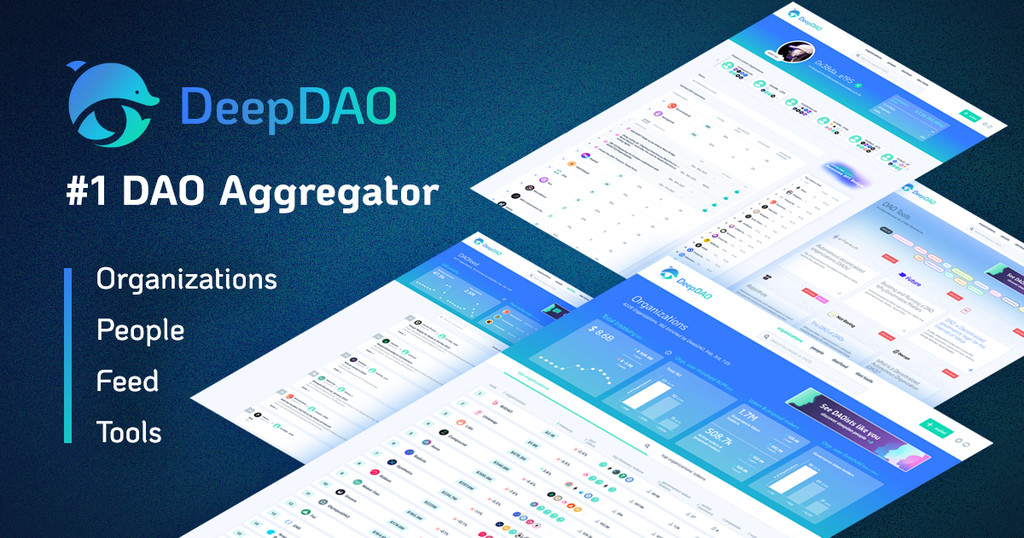
DeepDAO was traditionally one of many main DAO discovery and analytics platforms, protecting proposals, votes, voters, delegates and treasury data. Nevertheless, its present standing wants particular consideration: DeepDAO states that its information is not being up to date, with the final replace dated November 24, 2025. It now describes the location as a static snapshot and advises towards utilizing it for present analysis or decision-making.
Consequently, DeepDAO stays helpful for historic AI analysis and datasets, nevertheless it shouldn’t be handled as a present 2026 exercise monitor.
Aragon is primarily DAO creation and governance infrastructure fairly than an AI analytics platform. However, it supplies governance programs and instruments that generate worthwhile structured information for evaluation. Aragon says its know-how has supported 10,000+ tasks and greater than $35 billion in ruled property.
Its governance framework can present details about proposals, permissions, voting and organizational choices that may subsequently be analyzed utilizing AI or exterior analytics programs.
DAO governance evaluation is shifting from easy dashboards towards AI-assisted governance intelligence. DeGov Atlas represents this shift most instantly, whereas Dune supplies the broader information infrastructure wanted for stylish AI evaluation. Tally, Snapshot, Agora and Boardroom provide structured governance data, whereas DAOhaus and DAO Portal more and more flip uncooked exercise into interpretable indicators.
Crucial consideration when selecting a software is subsequently not merely whether or not it says “AI.” Analysts ought to look at information freshness, governance protection, voter-level data, proposal context, transparency of methodology and whether or not AI-generated conclusions might be traced again to verifiable blockchain information. That distinction is especially essential as a result of automated summaries can comprise errors, whereas governance choices can contain substantial monetary and organizational penalties.
Disclaimer
Consistent with the Trust Project guidelines, please word that the data offered on this web page shouldn’t be meant to be and shouldn’t be interpreted as authorized, tax, funding, monetary, or some other type of recommendation. You will need to solely make investments what you possibly can afford to lose and to hunt impartial monetary recommendation in case you have any doubts. For additional data, we propose referring to the phrases and circumstances in addition to the assistance and help pages offered by the issuer or advertiser. MetaversePost is dedicated to correct, unbiased reporting, however market circumstances are topic to alter with out discover.
About The Creator
Anastasiia O. is an editor at MPost, the place she focuses on reshaping content material throughout a large spectrum of subjects. With a watch for element and a real curiosity in storytelling, she helps be certain that the content material is each correct and interesting. Her expertise spans a number of areas, offering her with the data to supply insightful contributions to varied subjects highlighted on the platform.

Anastasiia O. is an editor at MPost, the place she focuses on reshaping content material throughout a large spectrum of subjects. With a watch for element and a real curiosity in storytelling, she helps be certain that the content material is each correct and interesting. Her expertise spans a number of areas, offering her with the data to supply insightful contributions to varied subjects highlighted on the platform.